






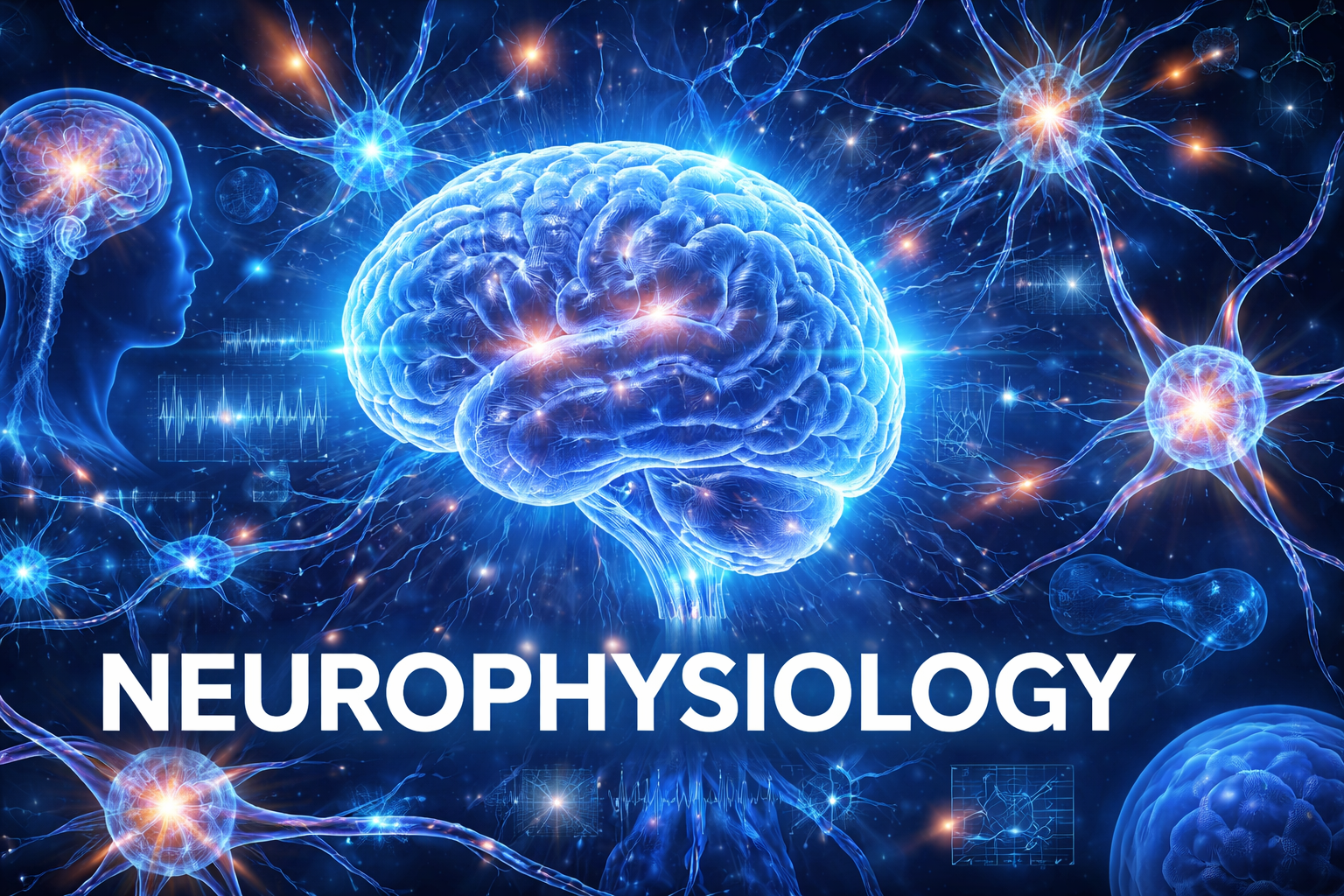
Neurophysiology is the scientific study of how the nervous system functions. It explains how the brain, spinal cord, and nerves communicate using electrical and chemical signals to regulate every activity in the human body. From simple reflexes to complex thoughts and emotions, neurophysiology forms the foundation of human behavior and survival.
This field plays a crucial role in medicine, neuroscience, psychology, and clinical diagnosis, helping experts understand both normal neural function and neurological disorders.
The Nervous System: The Body’s Communication Network
The nervous system acts as the body’s internal communication highway. It continuously receives information from the environment, processes it, and sends appropriate responses to muscles and organs.
The system is broadly divided into the central nervous system and the peripheral nervous system. Together, they ensure coordination, balance, and adaptability in changing conditions.
Central Nervous System: The Command Center
The brain and spinal cord form the central nervous system. The brain is responsible for higher mental functions such as memory, learning, emotion, and decision-making. It also regulates vital functions like breathing, heart rate, and body temperature.
The spinal cord serves as a pathway for nerve impulses traveling between the brain and the rest of the body. It also controls reflex actions that require immediate responses.
Peripheral Nervous System: Connecting Brain to Body
The peripheral nervous system connects the central nervous system to muscles, glands, and sensory organs. It allows the body to respond to both internal and external stimuli.
This system includes the somatic nervous system, which controls voluntary movements, and the autonomic nervous system, which regulates involuntary functions such as digestion and heart rate.
The autonomic system is further divided into sympathetic and parasympathetic systems, maintaining balance within the body.
Neurons: The Core Units of Neurophysiology
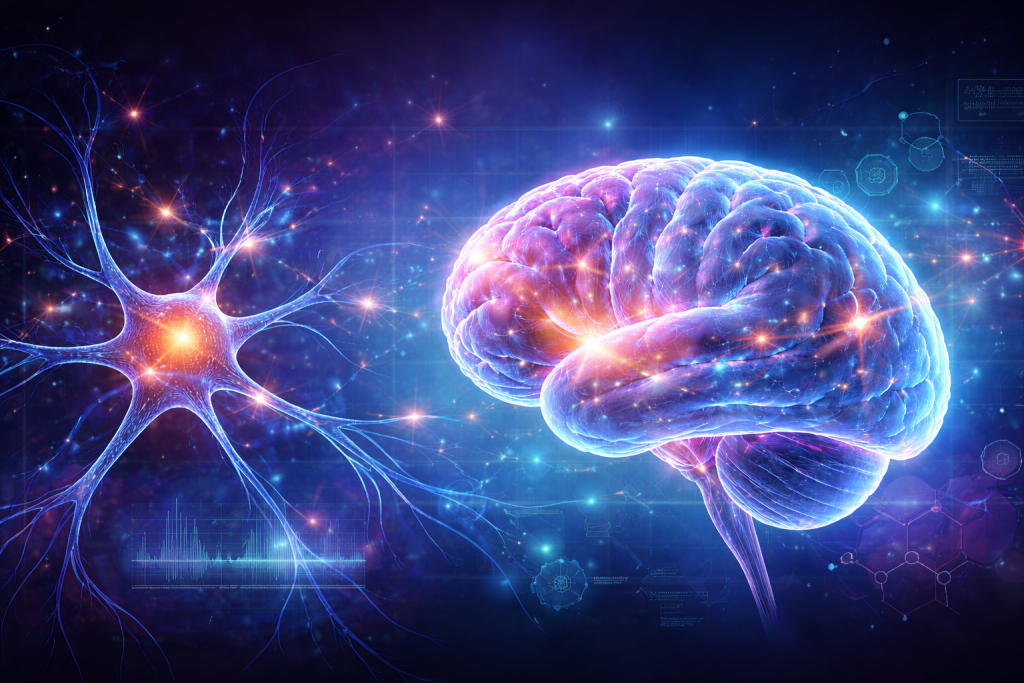
Neurons are specialized nerve cells designed to transmit information rapidly. Each neuron consists of dendrites that receive signals, a cell body that processes information, and an axon that transmits signals to other cells.
Neurons form complex networks through synapses, allowing communication across the nervous system. A single neuron can connect with thousands of others, creating highly efficient signaling pathways.
Action Potentials: The Electrical Language of the Nervous System
Neural communication depends on action potentials—rapid electrical changes across the neuron’s membrane. These changes occur due to the movement of sodium and potassium ions through specialized ion channels.
Once generated, an action potential travels along the axon without losing strength, ensuring reliable signal transmission.
Electric impulses are how the nervous system speaks.
Synaptic Transmission: Where Signals Switch Form
At synapses, electrical signals are converted into chemical signals. When an action potential reaches the synaptic terminal, neurotransmitters are released into the synaptic cleft.
These chemicals bind to receptors on the next neuron, triggering a new electrical signal. This precise mechanism allows accurate communication across neural circuits.
Neurotransmitters That Shape Behavior
Different neurotransmitters perform specific roles in the nervous system. Acetylcholine controls muscle contraction and memory. Dopamine influences motivation and reward. Serotonin regulates mood and sleep, while GABA inhibits excessive neural activity.
Imbalances in neurotransmitters are linked to various neurological and psychiatric disorders.
Sensory Neurophysiology: How the Brain Interprets Reality
Sensory receptors detect physical and chemical stimuli such as light, sound, pressure, and temperature. These receptors convert stimuli into electrical signals through a process called transduction.
Signals are then transmitted to specific regions of the brain where perception occurs. This explains how we see, hear, touch, taste, and smell.
Motor Neurophysiology: Turning Signals into Movement
Motor neurons carry impulses from the central nervous system to muscles. At the neuromuscular junction, neurotransmitters trigger muscle contraction, producing movement.
Damage to motor pathways can lead to weakness, paralysis, or loss of coordination, highlighting the importance of intact neural signaling.
Semantic keywords include motor neuron function, neuromuscular junction, muscle contraction physiology.
.
Reflexes: The Body’s Fastest Responses
Reflex actions are rapid, automatic responses to stimuli that protect the body from harm. These responses follow a reflex arc involving sensory neurons, interneurons, and motor neurons.
Because reflexes bypass higher brain centers, they occur faster than voluntary actions.
Clinical Importance of Neurophysiology
Neurophysiology is essential in diagnosing neurological disorders. Techniques such as electroencephalography, electromyography, and nerve conduction studies help assess neural function.
These tools assist in identifying conditions like epilepsy, neuropathy, Parkinson’s disease, and multiple sclerosis.
Neurophysiology and Neurological Disorders
Conditions such as stroke, Alzheimer’s disease, motor neuron disease, and epilepsy can be better understood through neurophysiological principles. Studying abnormal neural activity allows early diagnosis and targeted treatment strategies.
The Future of Neurophysiology
Advances in neurophysiology are driving innovations such as brain–computer interfaces, neuroprosthetics, and AI-assisted neural mapping. These developments promise improved treatments and deeper understanding of the human brain.
.
Final Perspective
Neurophysiology explains how the nervous system coordinates every function of the human body. From basic reflexes to advanced cognition, life depends on precise neural communication.
As science advances, neurophysiology continues to unlock the mysteries of the brain, offering hope for better treatments and enhanced human potential.