








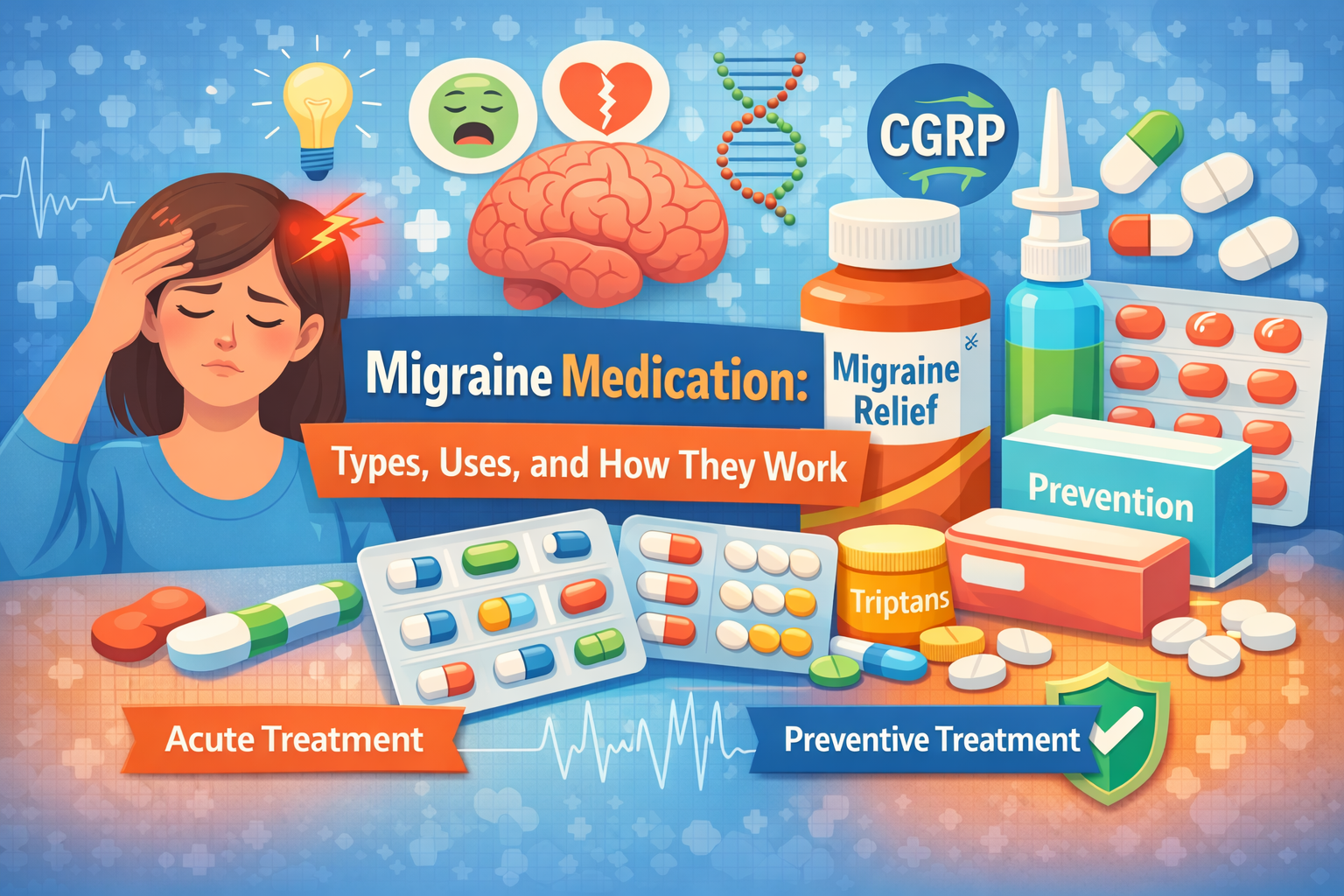
Migraine medication is essential because migraine is more than just a normal headache. It is a neurological condition that can cause severe head pain, nausea, vomiting, and sensitivity to light or sound. For many people, migraine attacks can affect daily life, work, and sleep.
Migraine is more than just a normal headache. It is a neurological condition that can cause severe head pain, nausea, vomiting, and sensitivity to light or sound. For many people, migraine attacks can affect daily life, work, and sleep.
What Is Migraine Medication?

Migraine medication refers to medicines used to:
- Stop migraine pain once it starts
- Prevent migraine attacks from happening often
Doctors usually choose medication based on:
- How severe your migraine is
- How often attacks occur
- Your age and health condition
Migraine medicines are generally divided into two main types:
- Acute (pain-relief) medications
- Preventive (long-term) medications
1. Acute Migraine Medications (Pain Relief)
Acute medications are taken when a migraine attack begins. Their goal is to reduce pain and other symptoms like nausea or sensitivity to light.
a) Over-the-Counter (OTC) Medications
These are commonly used for mild to moderate migraine.
Examples include:
- Paracetamol (acetaminophen)
- Ibuprofen
- Aspirin
How they work:
These medicines reduce inflammation and block pain signals in the brain.
Best for:
- Occasional migraines
- Early-stage attacks
⚠️ Using them too often may cause medication-overuse headache, so they should not be taken daily without medical advice.
b) Triptans
Triptans are prescription migraine medications used for moderate to severe migraine.
Common examples:
- Sumatriptan
- Rizatriptan
- Zolmitriptan
How they work:
Triptans help by:
- Narrowing blood vessels in the brain
- Blocking pain signals
- Reducing inflammation related to migraine
Best for:
- Severe migraine pain
- Migraine with nausea or light sensitivity
They work best when taken early during a migraine attack.
c) Anti-Nausea Medications
Some migraines cause strong nausea or vomiting.
Doctors may prescribe medicines like:
- Metoclopramide
- Domperidone
How they work:
These medicines help calm the stomach and improve digestion, making other migraine medications work better.
2. Preventive Migraine Medications (Long-Term Control)
Preventive medications are taken daily or regularly, even when you are not having pain. They are used when:
Migraines happen frequently
Attacks are severe or long-lasting
Pain relief medicines do not work well
The goal is to reduce how often migraines occur and how severe they are.
a) Blood Pressure Medicines
Some medicines originally made for high blood pressure are helpful for migraine prevention.
Examples:
Beta blockers
Calcium channel blockers
How they work:
They help stabilize blood flow and reduce stress on brain blood vessels, lowering migraine risk.
b) Antidepressantsb
Certain antidepressants are effective even if the person is not depressed.
How they work:
They balance brain chemicals like serotonin, which play a role in migraine attacks.
c) Anti-Seizure Medications
These medicines calm overactive nerve signals in the brain.
How they work:
They reduce abnormal electrical activity that can trigger migraines.
d) CGRP Inhibitors (New Migraine Medications)
CGRP medications are modern treatments specially designed for migraine.
How they work:
They block a protein called CGRP (Calcitonin Gene-Related Peptide), which is involved in migraine pain and inflammation.
Benefits:
Fewer side effects
Designed only for migraine
Useful for chronic migraine sufferers
These medicines are usually prescribed by neurologists.
How to Choose the Right Migraine Medication
There is no single best migraine medication for everyone. The right choice depends on:
Frequency of migraine attacks
Pain severity
Other health conditions
Age and lifestyle
Doctors may try different medicines before finding the best one for you.
Important Tips for Migraine Medication Users
Take medication as advised by a doctor
Do not overuse painkillers
Keep a migraine diary to track triggers and symptoms
Combine medication with lifestyle changes like:
Proper sleep
Hydration
Stress management
Avoiding trigger foods
When Should You See a Doctor?
You should consult a doctor if:
- Migraines happen more than a few times a month
- Pain is severe or worsening
- Medication is not helping
- You experience vision problems, weakness, or confusion
Early treatment can prevent migraines from becoming chronic.
Conclusion
Migraine medication plays a very important role in managing migraine pain and improving quality of life. From simple painkillers to advanced preventive treatments, many options are available today.
Understanding the types, uses, and how migraine medications work helps you make better decisions and talk confidently with your doctor. With the right treatment plan, migraine can be controlled, and life can become much easier